
Why I Practice Iyengar Yoga
I found yoga nearly two decades ago and, over the years, explored several different styles of practice. Every style offered something valuable and shaped my understanding in its own way.
Then I discovered Iyengar Yoga.
What first drew me to the practice was the sense that there was something to discover. I didn't yet have the words for it, but I saw practitioners who weren't simply doing the poses—they were completely present within them. I wanted to experience that for myself.
At some point, I realized I was no longer learning only individual poses. I began to notice that an action I had discovered in one pose would often reveal itself in another. Gradually, it became clear that the poses were not the destination. They were the doorway.
I began to notice the effect sequencing could have on the practice. A thoughtfully designed sequence created the conditions for very different experiences—sometimes leaving me feeling more energized, sometimes more grounded, sometimes profoundly quiet.
Because the body is the most tangible place to begin, it became the starting point for understanding something much deeper. The understanding came through experience, not explanation. The poses became a way of paying attention—of noticing where I was working unnecessarily, where I was avoiding effort, where I could remain steady, and where I could soften.
The same pose is never quite the same because I am not the same when I return to it. I began to recognize that the practice mirrored the way I met life itself.
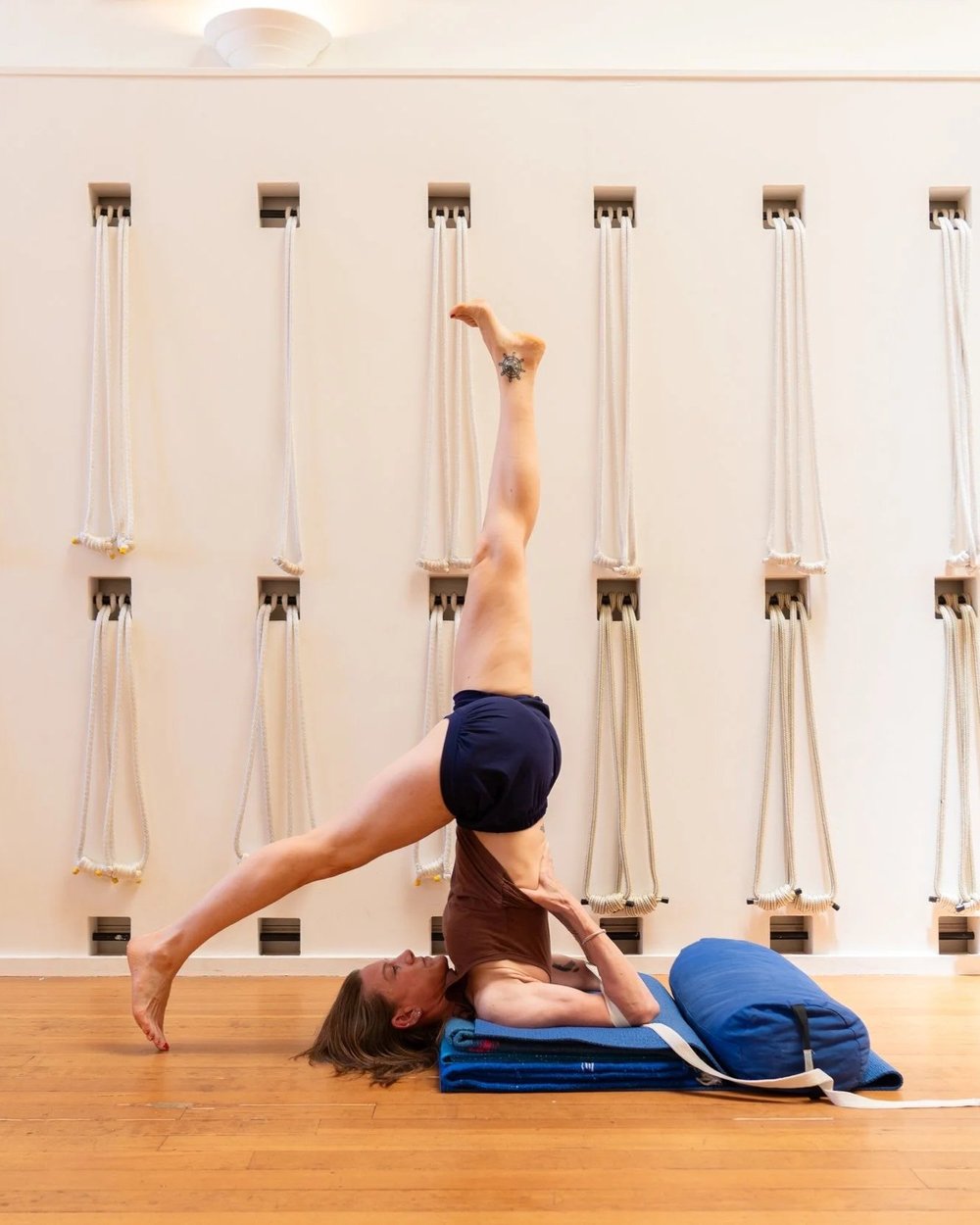
I see this most clearly in my Headstand practice.
When I practice Headstand near a wall, simply knowing it is there becomes a quiet reassurance, allowing me to settle more fully into the pose. Although the physical structure remains the same, the moment I move away from the wall, my experience changes. Instead of being in the pose, I'm doing the pose. Instead of being present, I become preoccupied with not falling.
It leaves me wondering where else I might be looking outside myself for a sense of security—and what might change if I learned to trust myself more deeply. I don't always leave the mat with an answer, but I almost always leave with a better question.
Why do I continue to practice?
For me, the practice has become a living relationship that continues to evolve—not because the method changes, but because I do. Over time, I find myself less concerned with doing the pose and more interested in being fully present within it.
And every so often, the noise quiets. For a moment, there is nothing to do—only the opportunity to rest more fully in what has always been there.
Frequently Asked Questions
If you're curious about Iyengar Yoga—what makes it unique, who it's for, and what to expect—here are answers to a few common questions.
1. What is Iyengar Yoga?
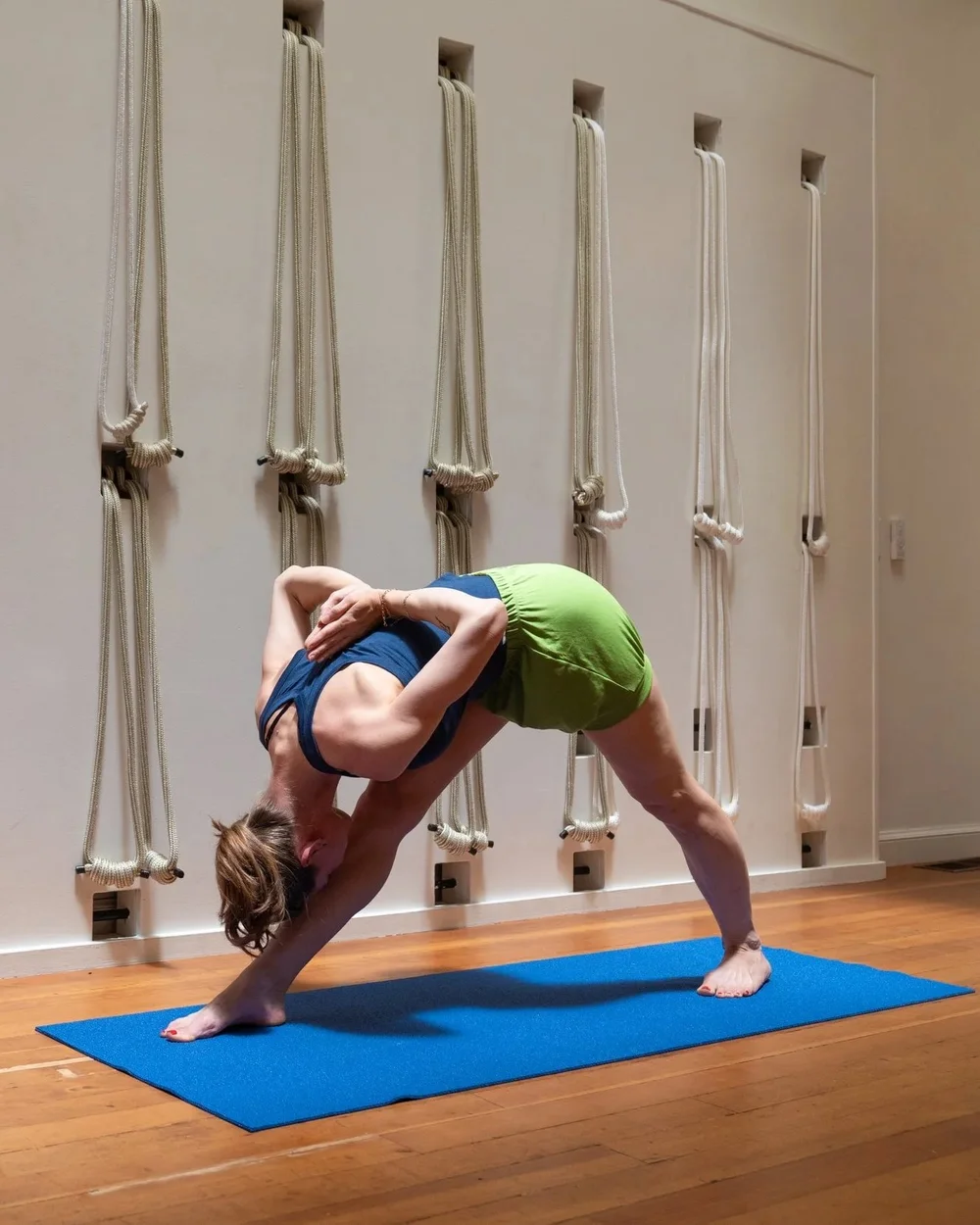
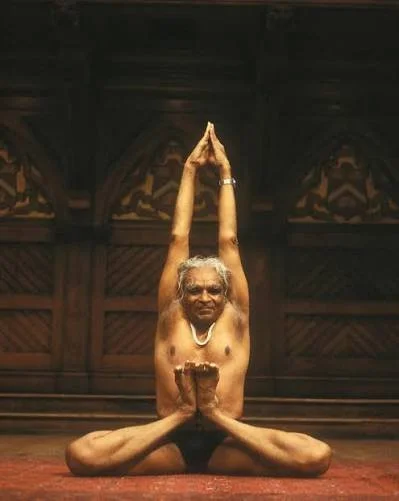
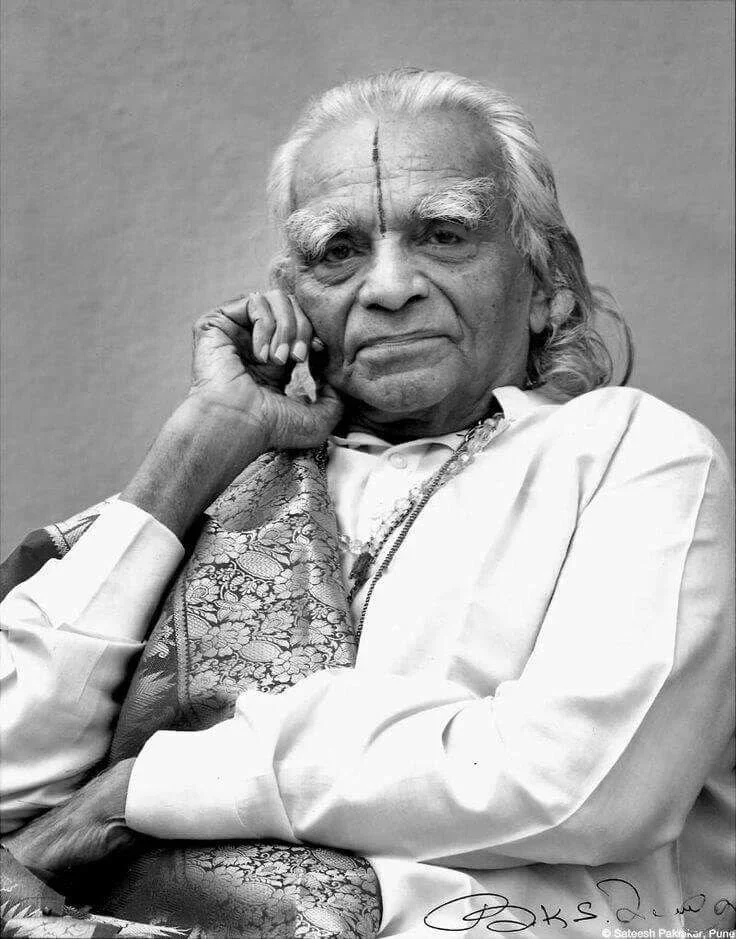
Iyengar Yoga is a method of yoga developed by B.K.S. Iyengar and rooted in the eight-limbed tradition of Patañjali. It approaches yoga as an art, a science, and a philosophy, with a systematic and progressive method of learning. Precision, alignment, sequencing, timing, and the use of props are distinguishing features of the practice, encouraging conscious and intelligent action. Through the study of asana and pranayama, students develop not only strength, stability, flexibility, and balance, but also concentration of the mind and greater awareness.
2. How is Iyengar Yoga different from other styles of yoga?
Rather than following a fixed sequence of poses, asanas are selected and sequenced according to the purpose of the practice. Detailed instruction, demonstration, observation, and correction help students develop precision and understanding, while poses may be held longer to allow time for refinement and deeper observation. Props are often used to support correct action and adapt the practice to individual needs.
Certified Iyengar Yoga Teachers undergo rigorous training and assessment and engage in ongoing study and education, maintaining a high and consistent standard of teaching within the method.
3. Do I need to be flexible or experienced?
No previous yoga experience or particular level of flexibility is required. Iyengar Yoga is taught progressively, beginning with foundational poses and actions and developing according to each student's capacity. Props and modifications allow the practice to be adapted to individual needs and abilities.
4. Why are props used?
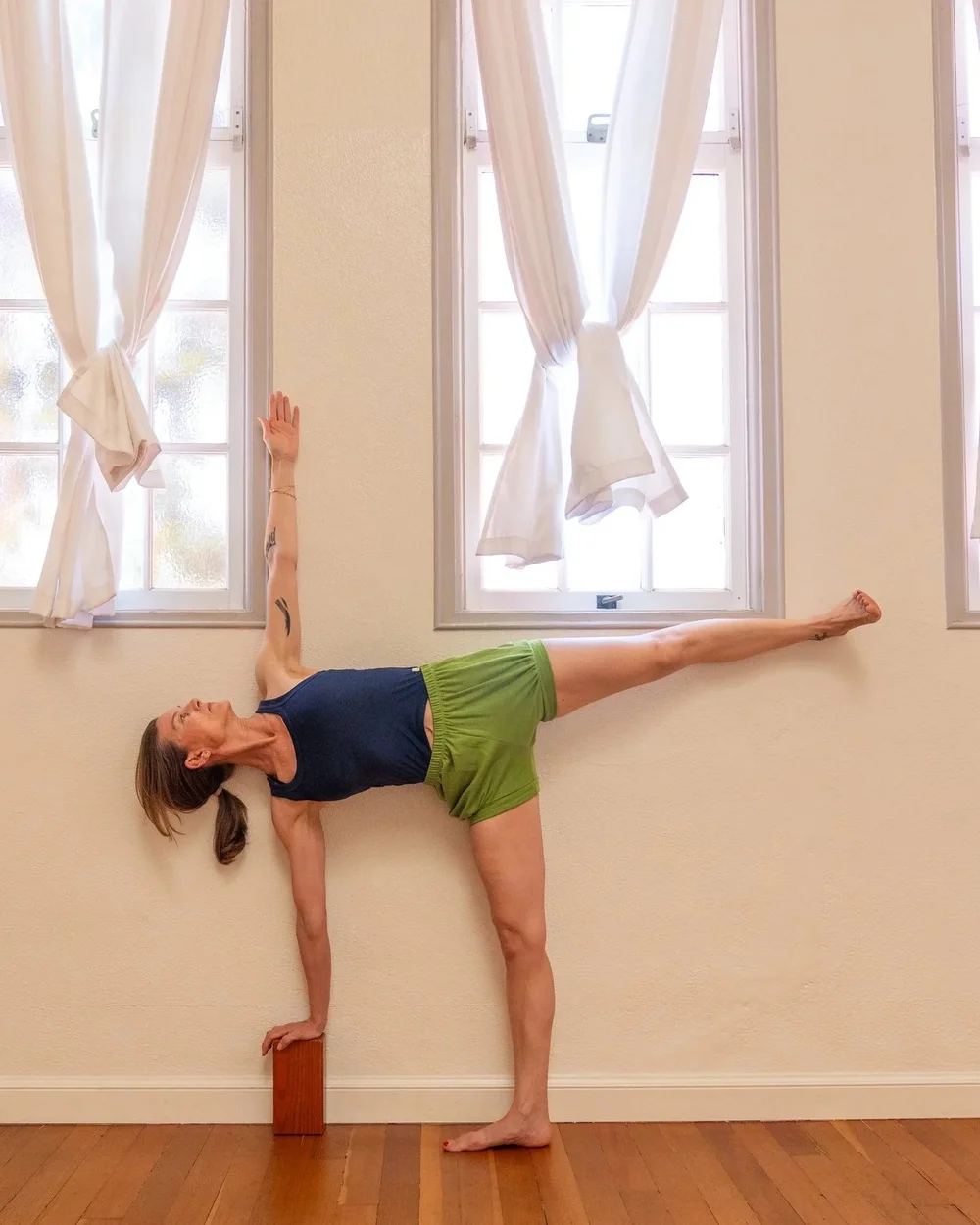
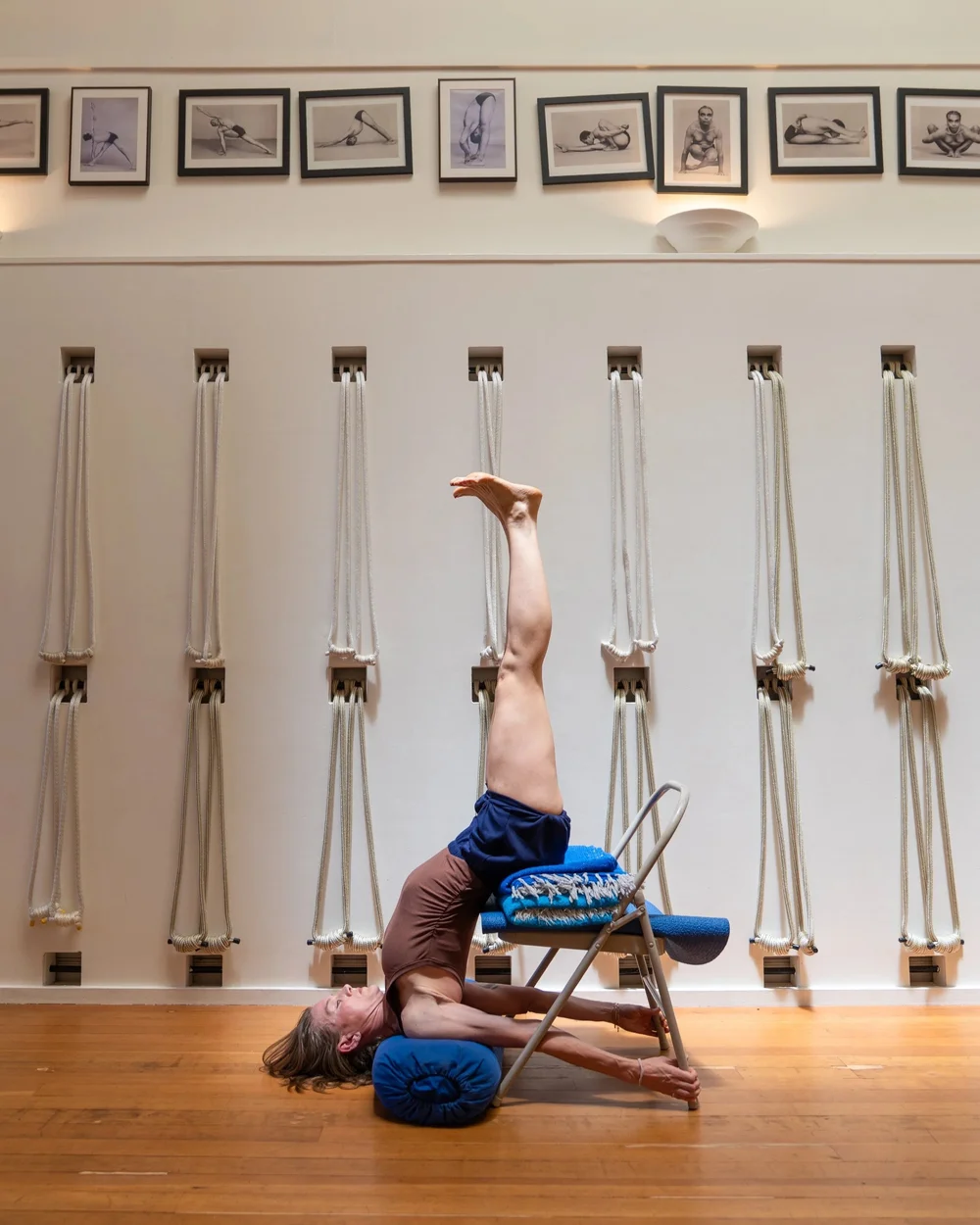
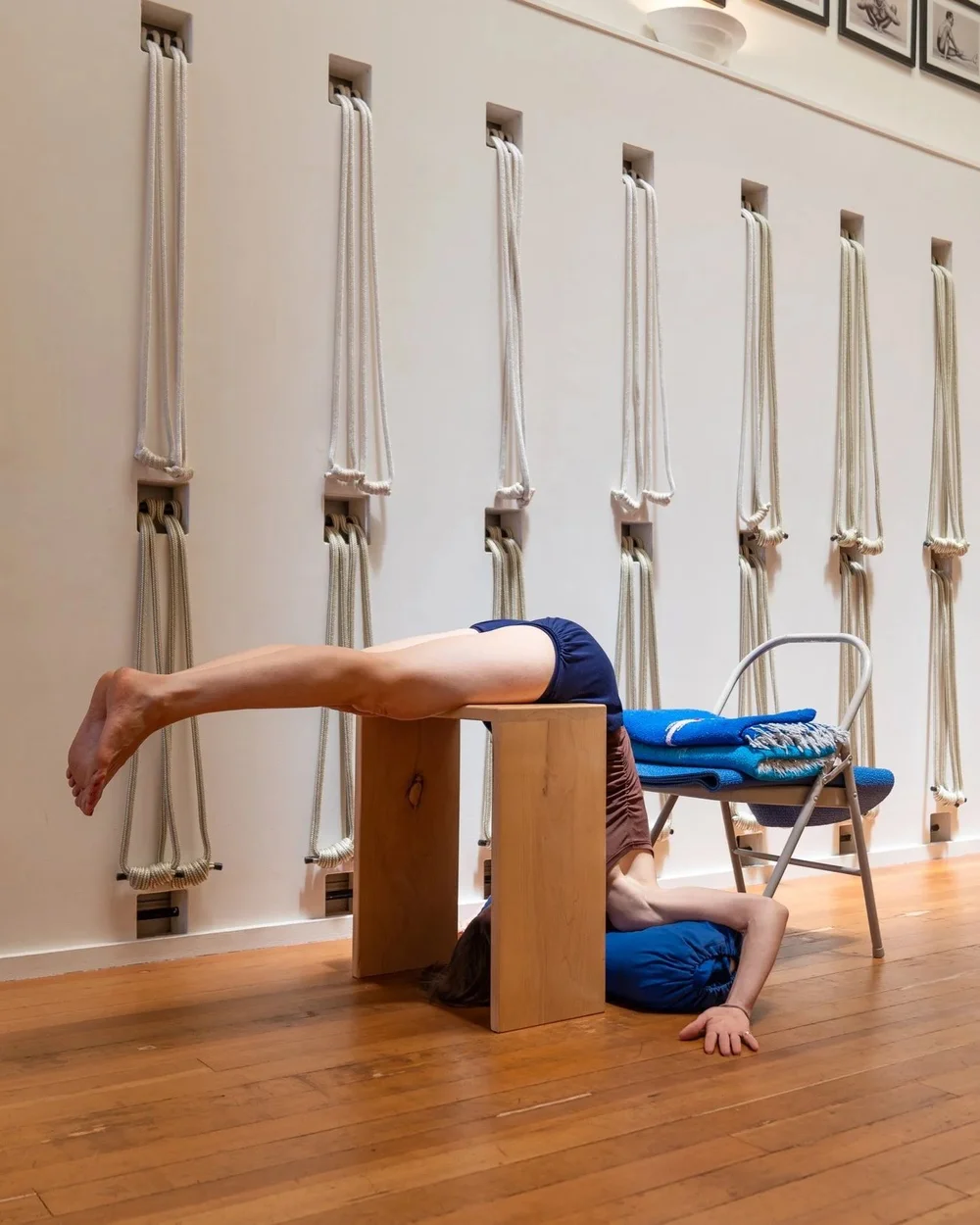
B.K.S. Iyengar introduced the use of props to help students experience and understand the actions of a pose more clearly. Props such as blocks, belts, blankets, bolsters, and chairs can provide support, improve alignment and stability, allow students to remain in poses longer, and make poses accessible that might otherwise be difficult or unavailable to the student. They are not simply used to make poses easier; when used intelligently, props become tools for study, helping students develop greater precision and understanding in the asanas.
5. What should I expect in an Iyengar Yoga class?
Iyengar Yoga classes are intentionally sequenced and taught through clear, precise instruction and demonstration. Teachers observe students closely and provide corrections and modifications as needed. The practice encompasses a full range of asanas, from standing poses and forward and backward extensions to twists, inversions, and restorative poses.
6. Who is Iyengar Yoga for?
Iyengar Yoga is for all. The same foundational principles serve both beginning and experienced practitioners. As students develop, the practice expands to include a broader range of asanas and increasingly refined ways of working.
7. What should I wear or bring to class?
Wear comfortable clothing that allows you to move freely. Iyengar Yoga is practiced barefoot, and most studios provide the props needed for class. You are welcome to bring your own mat if you prefer.